
Introduction
In PVC pipe manufacturing, vacuum calibration is responsible for maintaining:
- Pipe Diameter
- Roundness
- Surface Smoothness
- Dimensional Consistency
Even with a properly operating twin extruder, poor vacuum calibration can create major quality issues.
Common problems include:
- Ovality
- Diameter Variation
- Pipe Collapse
- Surface Marks
- Wall Thickness Inconsistency
Proper calibration ensures stable and accurate pipe production.
What Is Vacuum Calibration in a Twin Extruder Line?
After molten PVC exits the die head, the pipe enters the vacuum calibration tank.
The calibration system:
- Stabilizes Pipe Shape
- Controls Outer Diameter
- Assists Cooling
- Maintains Dimensional Accuracy
Vacuum pressure pulls the pipe against calibration sleeves for sizing stability.
Major Components of Vacuum Calibration System
1) Vacuum Tank
Maintains negative pressure for pipe sizing.
Key Functions:
- Pipe Stabilization
- Diameter Control
- Initial Cooling Support
2) Vacuum Pump
Creates stable vacuum pressure inside the tank.
Unstable vacuum pressure can lead to:
- Ovality
- Pipe Vibration
- Dimensional Instability
3) Cooling Water System
Cooling water maintains pipe rigidity during calibration.
Improper cooling creates:
- Pipe Bending
- Uneven Shrinkage
- Surface Defects
Related:
PVC Pipe Surface Roughness Problem
4) Calibration Sleeves
Calibration sleeves directly control pipe dimensions.
Damaged sleeves may cause:
- Scratches
- Surface Marks
- Size Variation
Step-by-Step Vacuum Calibration Troubleshooting
Step 1) Check Vacuum Pressure Stability
Pressure fluctuation affects pipe dimensions immediately.
Monitor:
- Vacuum Gauge Readings
- Pump Performance
- Leakage Points
Step 2) Inspect Calibration Sleeves
Check for:
- Wear
- Damage
- Carbon Deposits
Clean regularly for smooth pipe surface.
Step 3) Verify Cooling Water Flow
Ensure:
- Balanced Water Circulation
- Proper Water Temperature
- Uniform Cooling Across Tank
Step 4) Monitor Pipe Center Alignment
Misalignment causes:
- Ovality
- Uneven Wall Thickness
- Pipe Bending
Step 5) Stabilize Extrusion Output
Unstable melt flow affects calibration performance.
Best Practices for Stable Vacuum Calibration
- Maintain stable vacuum pressure
- Clean calibration sleeves regularly
- Optimize cooling water temperature
- Align die and calibration system properly
- Monitor pipe dimension continuously
Consistent calibration improves overall product quality.
Role of Extruder Screw in Calibration Stability
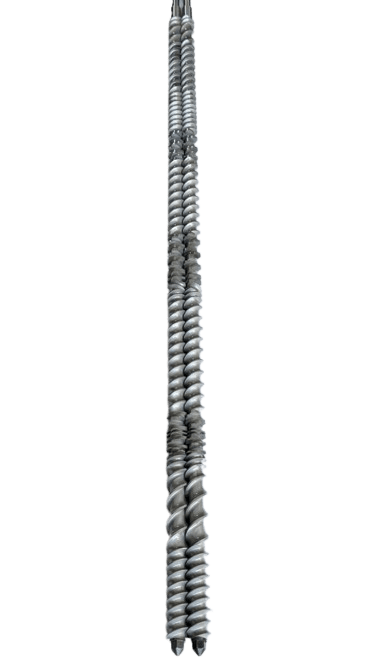
Extruder screw performance directly impacts vacuum calibration.
Unstable screw operation causes:
- Melt Fluctuation
- Pressure Variation
- Pipe Instability
Conclusion
- Vacuum Pressure
- Cooling Stability
- Calibration Sleeve Condition
- Extrusion Consistency
- Better Pipe Roundness
- Stable Dimensions
- Lower Rejection Rate
- Improved Production Quality
Need Help Optimizing Your Vacuum Calibration System?
We provide:
- Twin extruder troubleshooting
- Extruder screw optimization
- Complete PVC extrusion consulting