
Introduction
When purchasing a twin screw extruder, many manufacturers focus primarily on the initial machine price. However, the purchase price represents only one part of the financial commitment involved in operating extrusion equipment.
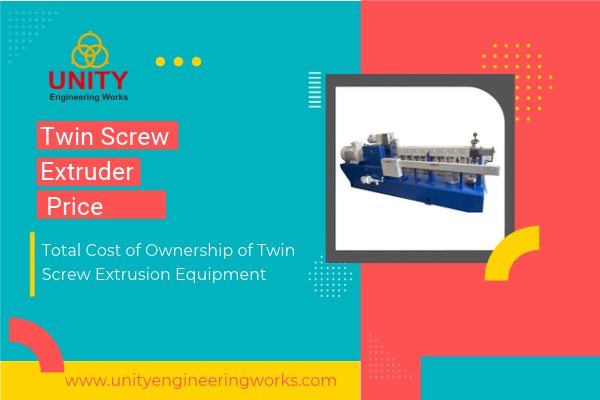
The twin screw extruder total cost of ownership includes installation, electricity, labour, maintenance, replacement parts, material losses and other expenses throughout the machine’s service life.
For PVC and UPVC pipe manufacturers, understanding these costs is essential for selecting equipment that supports efficient and financially sustainable production.
This guide explains the major components of extrusion equipment ownership costs, how to calculate them and what manufacturers should evaluate before investing.
What Is the Total Cost of Ownership of a Twin Screw Extruder?
Total cost of ownership (TCO) represents the complete cost of purchasing, installing, operating, maintaining and eventually replacing or disposing of extrusion machinery over a defined period.
Unlike the initial purchase price, TCO considers the financial impact of daily production and long-term equipment maintenance.
A basic formula is:
Total Cost of Ownership = Initial Investment + Operating Costs + Maintenance Costs + Downtime Costs + Other Lifecycle Expenses − Residual Value
For a meaningful comparison, manufacturers should use the same ownership period and production assumptions for every machine being evaluated.
1. Initial Machine Purchase and Installation Costs
The first component of TCO is the investment required to make the extrusion equipment operational.
Typical expenses include:
- Twin screw extruder machine purchase price
- Screw and barrel configuration
- Gearbox and drive system
- Die head and tooling
- Vacuum calibration and cooling equipment
- Haul-off and cutting systems
- Electrical connections and installation
- Transportation and commissioning
- Operator training
Some quotations include only the extruder, while others cover additional downstream equipment.
Therefore, manufacturers should confirm the exact scope of supply before comparing machine prices.
A lower quotation may not represent a lower total investment if essential components are excluded.
2. Electricity and Energy Consumption
How to Calculate Electricity Cost
Annual Electricity Cost = Average Line Power Consumption (kW) × Annual Operating Hours × Electricity Tariff Consider this hypothetical example:| Parameter | Example value |
|---|---|
| Average total line power demand | 75 kW |
| Operating hours per day | 16 |
| Operating days per year | 300 |
| Annual operating hours | 4,800 |
| Electricity tariff | ₹8/kWh |
| Annual electricity cost | ₹28,80,000 |
Why Energy Efficiency Matters
Even a small reduction in electricity consumption can create meaningful savings over several years. Manufacturers should compare machines using measured energy consumption per kilogram of acceptable finished product, rather than motor ratings alone.3. Screw and Barrel Maintenance Costs
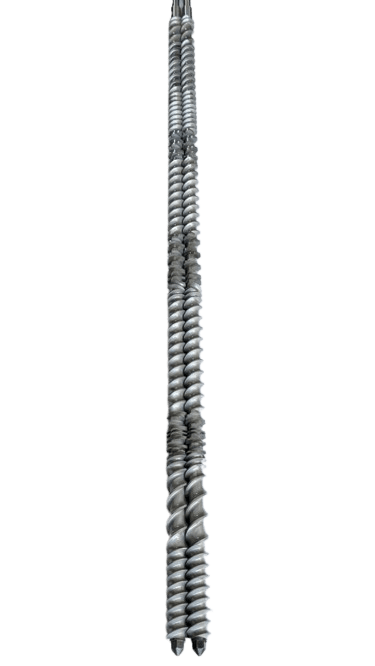
Screws and barrels are critical components of twin screw extrusion equipment.
Their condition affects material conveying, mixing, melting and processing stability.
Over time, wear can increase maintenance requirements and may affect production consistency.
Factors Affecting Screw and Barrel Wear
- Material formulation and filler content
- Processing temperature
- Screw speed and operating load
- Abrasive or contaminated materials
- Maintenance practices
- Component material and manufacturing quality
Routine inspection helps identify developing wear before it causes serious operating problems.
Manufacturers can learn more about equipment configuration in our twin extruder screw design guide.
Maintenance Cost Considerations
When calculating TCO, include:
- Scheduled inspection expenses
- Screw and barrel servicing
- Replacement components
- Lubricants and consumables
- Maintenance labour
- Expected repair expenses
Maintenance budgets should be based on actual operating conditions and available equipment history.
4. Gearbox and Drive System Costs
The gearbox transfers mechanical power from the motor to the extruder screws.
Reliable gearbox operation is important for consistent extrusion performance.
Potential ownership expenses include lubrication, inspections, seals, bearings and repairs.
Operating conditions that exceed recommended limits may increase wear or lead to premature component failure.
Manufacturers should review gearbox specifications, maintenance requirements and spare parts availability when evaluating extrusion machinery.
For a broader understanding of the machinery, explore our guide to the key components of a twin extruder.
5. Production Downtime and Its Financial Impact
Unplanned downtime can be one of the most significant indirect expenses associated with extrusion equipment.
When an extrusion line stops unexpectedly, manufacturers may experience:- Lost production output
- Labour costs during idle periods
- Startup material waste
- Delayed customer orders
- Additional maintenance expenses
- Rescheduling of production activities
Example Downtime Cost Calculation
Suppose a production line generates a contribution margin of ₹4,000 per productive hour. If avoidable equipment downtime totals 40 hours annually: Annual Lost Contribution = 40 × ₹4,000 = ₹1,60,000 This example considers lost contribution only. Actual financial losses depend on whether production can be recovered through additional shifts, available inventory or alternative equipment.Reducing Downtime
Preventive maintenance, operator training, suitable component selection and systematic inspection can help reduce unexpected interruptions. Our article on segmented screw and barrel benefits explains how modular component designs may support maintenance flexibility.6. Material Waste and Rejection Costs
- Machine startup
- Product size changeovers
- Unstable processing
- Incorrect temperature settings
- Inconsistent feeding
- Product quality rejection
Calculating Material Waste Cost
Material Waste Cost = Unrecoverable Material Quantity × Effective Material Cost per Kilogram For example, if a manufacturer loses 1,500 kg of material annually and the effective material cost is ₹65/kg: Annual Material Waste Cost = ₹97,500 The calculation should account for recoverable material and its actual reuse value rather than treating all scrap as a complete financial loss. Maintaining stable processing conditions can help control waste and improve production efficiency.7. Labour and Operator Training Expenses
Extrusion machinery requires trained personnel for operation, inspection and routine maintenance.
Labour-related ownership costs may include:- Machine operators
- Production supervisors
- Maintenance technicians
- Quality inspection personnel
- Training and skill development
8. Spare Parts Availability and Replacement Costs
Replacement parts are an important consideration when evaluating long-term equipment ownership.
Critical components may include screws, barrel sections, heaters, sensors, seals, bearings and drive-related parts. Before purchasing equipment, manufacturers should ask about:- Availability of replacement components
- Expected lead times
- Component compatibility
- Technical documentation
- Recommended spare parts inventory
- Warranty coverage and exclusions
9. Calculate Five-Year Total Cost of Ownership
A five-year comparison can help manufacturers understand how recurring expenses influence the overall investment.
The following example uses hypothetical figures for illustration.| Cost component | Machine A | Machine B |
|---|---|---|
| Initial investment | ₹40,00,000 | ₹48,00,000 |
| Five-year electricity cost | ₹1,50,00,000 | ₹1,35,00,000 |
| Five-year maintenance cost | ₹15,00,000 | ₹11,00,000 |
| Five-year downtime cost | ₹10,00,000 | ₹6,00,000 |
| Five-year unrecoverable waste cost | ₹8,00,000 | ₹6,00,000 |
| Estimated residual value | ₹5,00,000 | ₹7,00,000 |
| Five-year TCO | ₹2,18,00,000 | ₹1,99,00,000 |
10. Total Cost of Ownership vs Return on Investment
Although TCO and ROI are related, they answer different financial questions.
| Total Cost of Ownership | Return on Investment |
|---|---|
| Measures overall equipment ownership expenses | Measures financial returns relative to investment |
| Focuses on costs over the equipment lifecycle | Focuses on profitability and investment performance |
| Useful for comparing operating expenses | Useful for evaluating financial benefits |
| Includes purchase, operation and maintenance | Includes net financial benefits and investment cost |
11. How to Reduce Twin Screw Extruder Ownership Costs
Reducing TCO requires attention to equipment selection and ongoing operating practices.
Select Equipment for Actual Production Requirements
Choose a machine configuration suited to the intended material, product dimensions and expected output.Monitor Energy Consumption
Measure electricity usage and identify opportunities to improve energy efficiency without compromising product quality.Follow Preventive Maintenance Schedules
Regular inspections can help identify component wear and reduce the likelihood of unexpected equipment failures.Minimize Production Waste
Monitor rejection rates, startup scrap and processing consistency.Train Operators
Proper operator training supports safe machine operation, effective troubleshooting and consistent production practices.Maintain Critical Spare Parts
Keeping suitable replacement components available may reduce downtime when repairs are required.12. Questions to Ask an Extruder Manufacturer Before Purchasing
Before finalizing an extrusion equipment investment, ask the manufacturer:
- What equipment and accessories are included in the quotation?
- What are the expected power requirements?
- Which materials and products can the proposed configuration process?
- What maintenance activities are recommended?
- Which components are expected to require periodic replacement?
- What spare parts and technical support are available?
- What commissioning and operator training services are included?
- What operating data can be provided to support cost estimates?
Conclusion
The total cost of ownership of a twin screw extruder extends far beyond its initial purchase price.
Electricity consumption, maintenance requirements, production downtime, material waste, labour and replacement components all influence the financial performance of extrusion machinery.
By calculating these expenses over a consistent ownership period, PVC and UPVC pipe manufacturers can make better-informed purchasing decisions.
The most economical extrusion machine is not necessarily the one with the lowest purchase price. It is the one that delivers suitable production performance at a sustainable total ownership cost.
Looking for a Twin Screw Extruder Manufacturer?
Unity Engineering Works provides extrusion machinery solutions for manufacturers evaluating new production equipment and industrial processing requirements.
Whether you are planning a PVC or UPVC pipe extrusion facility or considering an equipment upgrade, understanding operating requirements and long-term ownership costs is an important part of machine selection.
Contact Unity Engineering Works to discuss your extrusion application, production requirements and machinery specifications.