
Introduction
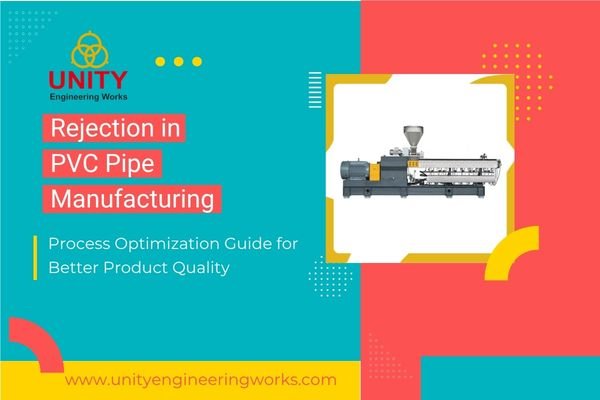
In PVC pipe manufacturing, even a small rejection percentage can lead to major financial loss.
Common rejection issues include:
- Ovality
- Surface Roughness
- Wall Thickness Variation
- Burn Marks
- Poor Socket Fitting
- Pressure Test Failure
Reducing rejection requires a combination of:
- Stable Extrusion
- Proper Cooling
- Accurate Calibration
- Consistent Raw Material Feeding
Most Common Causes of PVC Pipe Rejection
1️⃣ Feeding Instability
Inconsistent dry blend feeding creates unstable melt flow.
Effects:
- Diameter Variation
- Wall Thickness Inconsistency
- Pressure Fluctuation
👉 Related:
PVC Dry Blend Feeding Problems
2️⃣ Incorrect Barrel Temperature
Improper temperature settings affect PVC fusion quality.
Too Low:
- Poor Melting
- Rough Surface
Too High:
- PVC Degradation
- Burn Marks
👉 Learn More:
Twin Extruder Barrel Temperature Optimization
3️⃣ Melt Pressure Fluctuation
Pressure instability causes inconsistent pipe dimensions.
Results:
- Ovality
- Thickness Variation
- Surface Defects
👉 Related Guide:
Twin Extruder Melt Pressure Fluctuation
4️⃣ Improper Vacuum Calibration
Vacuum calibration controls pipe shape and dimensional stability.
Poor Calibration Leads To:
- Oval Pipes
- Diameter Inconsistency
- Surface Marks
5️⃣ Uneven Cooling
Improper cooling creates internal stress.
Effects:
- Pipe Bending
- Cracks
- Dimensional Instability
Maintain balanced cooling across all sections.
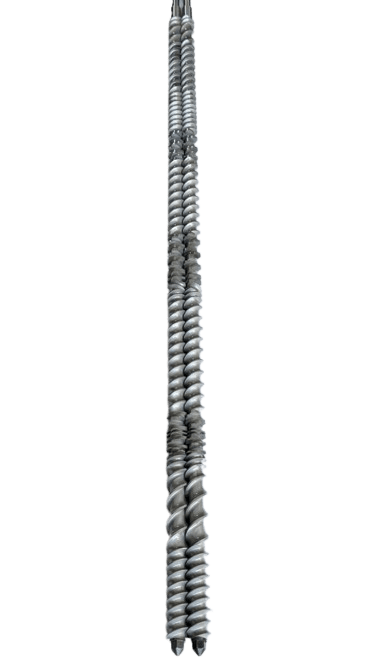
6️⃣ Screw & Barrel Wear
Worn components reduce process consistency.
Symptoms:
- Poor Mixing
- Output Instability
- Increased Rejection Rate
👉 Learn More:
Twin Extruder Screw Design Explained
Major PVC Pipe Defects & Their Causes
| Defect | Possible Cause |
|---|---|
| Ovality | Improper cooling / calibration |
| Burn Marks | Overheating |
| Rough Surface | Poor fusion |
| Wall Thickness Variation | Pressure fluctuation |
| Bubble Formation | Moisture contamination |
Step-by-Step Rejection Reduction Strategy
Step 1
Stabilize Material Feeding
Step 2
Optimize Barrel Temperature Profile
Step 3
Monitor Melt Pressure Continuously
Step 4
Maintain Proper Vacuum Calibration
Step 5
Ensure Uniform Cooling
Step 6
Inspect Screw & Barrel Condition Regularly
Advanced Quality Improvement Tips
Use high-quality PVC formulation
- Calibrate instruments regularly
- Track rejection trends daily
- Implement preventive maintenance
- Train machine operators properly
Consistent monitoring prevents major quality losses.
Conclusion
Reducing rejection in PVC pipe manufacturing requires complete process control.
By optimizing:
- Feeding
- Temperature
- Pressure
- Cooling
- Calibration
Manufacturers can achieve:
- Better product consistency
- Lower production waste
- Higher profitability
- Improved customer satisfaction
Need Help Optimizing PVC Pipe Production?
We provide:
- Complete extrusion process audits
- Rejection reduction consulting
- Twin extruder optimization
- PVC pipe quality improvement solutions