
Introduction: Why Screw Configuration Matters
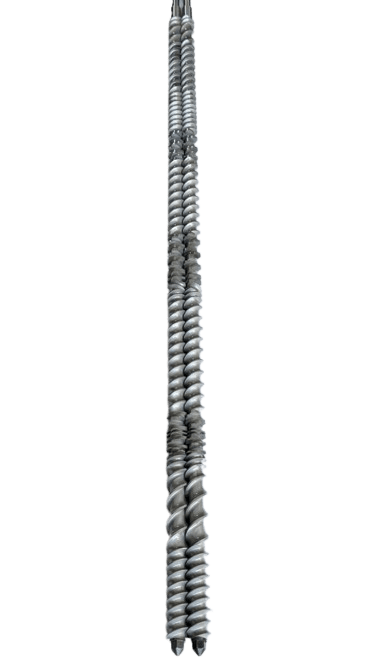
In twin-screw extrusion, the screw is the heart of the process. It determines:
- Material conveyance
- Shear and melting efficiency
- Mixing and dispersion
- Back pressure and melt quality
- Energy consumption
Even a small misalignment or wrong screw type can reduce throughput, increase scrap, and cause defects like melt fracture or surging.
This guide provides a complete blueprint to design, select, and optimize screws for PVC & UPVC extrusion.
Types of Screws for PVC & UPVC Extrusion
Conveying Screws
Function: Transport material from feed to melting zones
Key Feature: Flight pitch determines feed rate and pressure build-up
Compression Screws
Function: Gradually compress and melt material
Key Feature: Compression ratio controls shear and torque
Mixing Screws / Dispersive Elements
Function: Achieve uniform melt and dispersion of additives
Types: Kneading blocks, pins, reverse elements
Metering Screws
Function: Ensure consistent output at die exit
Key Feature: Length-to-diameter (L/D) ratio and flight depth affect final pressure
Key Screw Design Parameters
| Parameter | Impact on PVC/UPVC Extrusion |
|---|---|
| L/D Ratio | Higher L/D improves melting but may increase torque |
| Compression Ratio | Controls shear; too high = degradation |
| Flight Depth | Affects pressure & residence time |
| Mixing Elements | Ensures color/additive dispersion |
| Screw Wear Allowance | Extends life and prevents uneven output |
Tip: Always select screws according to the PVC formulation, filler percentage, and output requirement.
Screw Configuration Strategies for Optimal Performance
Start with Mild Shear
Conveying zone should gently move material without generating hotspots.
Gradual Compression
Compress slowly to avoid surging or premature melting.
Mixing Zones Placement
Place dispersive elements after melting but before metering.
Avoid clustering too many kneading blocks — reduces throughput.
Metering Zone Tuning
Adjust flight depth and L/D ratio for stable die pressure.
Use torque feedback to validate metering efficiency.
Customize for Additives
Colorants, stabilizers, and fillers require longer mixing zones or special pin configurations.
Maintenance & Replacement Guidelines
Inspect screws every 6 months for wear.
Check flight thickness — replace if clearance > 0.2–0.3 mm.
Clean screws thoroughly — material build-up affects shear and melt homogeneity.
Log torque and melt pressure trends to identify early wear signs.
Conclusion
Correct screw configuration is the single most effective way to improve extrusion efficiency, product quality, and equipment longevity.
By carefully designing screw types, adjusting compression ratios, and strategically placing mixing elements, manufacturers can achieve:
✅ Consistent melt quality
✅ Higher throughput
✅ Reduced scrap & energy consumption
✅ Longer screw and barrel life
At Unity Engineering Works, we design custom twin-screw screws optimized for PVC, UPVC, and WPC extrusion — ensuring maximum output and quality for your plant.