
A Practical Guide to Resolving Melt Fracture in PVC & uPVC Pipe Extrusion

A Practical Guide to Resolving Melt Fracture in PVC & uPVC Pipe Extrusion

Introduction: Why Melt Fracture Is a Serious Extrusion Problem

A smooth pipe surface isn’t just about appearance — it directly affects:

  • Pipe strength & pressure rating
  • Customer acceptance
  • Compliance with IS / ASTM standards
  • Rejection & reprocessing costs

Melt fracture often appears suddenly and operators try quick fixes like lowering speed —
which kills output but doesn’t solve the root cause.

This guide explains why melt fracture occurs and how to eliminate it correctly.

What Is Melt Fracture in PVC Extrusion?

Melt fracture is a surface distortion defect that appears as:

  • Rough or matte pipe surface
  • “Sharkskin” texture
  • Wavy or cracked appearance at die exit

It occurs when melt stress exceeds the material’s elastic limit as it exits the die.

Common Causes of Melt Fracture in PVC & uPVC Pipes

Excessive Shear Stress at the Die

High shear = polymer chains stretch too much and snap back unevenly.

Why it happens:

  • High screw RPM
  • Small die gap
  • Sharp die land edges

Improper Melt Temperature Profile

Too cold = high viscosity
Too hot = material degradation

Both conditions increase melt instability.

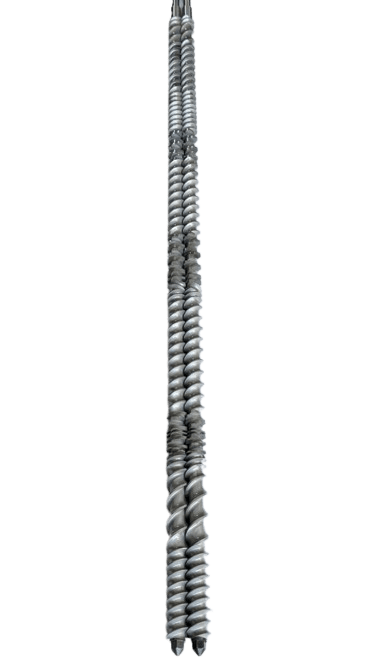
Poor Screw Design or Wear

Worn screws create:

  • Inconsistent melt flow
  • Pressure fluctuation
  • Localized overheating

Inconsistent Material Formulation

Variations in:

  • K-value
  • Lubricant balance
  • Filler dispersion

cause unstable melt elasticity.

Die Surface Roughness or Damage

Scratched or worn dies increase friction at exit — a very common overlooked reason.

Step-by-Step Troubleshooting Guide (Plant-Friendly)

✅ Step 1: Check Die & Land Geometry

✔ Polish die land
✔ Increase die land length slightly
✔ Remove sharp edges

📌 This alone solves ~30% of melt fracture cases.

✅ Step 2: Optimize Barrel Temperature Zones

ZoneRecommendation
Feed zoneSlightly cooler
Compression zoneGradual rise
Metering zoneStable, not excessive
Die zoneUniform & controlled

Avoid sudden temperature jumps.

✅ Step 3: Reduce Shear Without Reducing Output

Instead of slowing production:

✔ Increase die diameter marginally
✔ Use low-shear screw configuration
✔ Optimize compression ratio

✅ Step 4: Improve Material Homogeneity

✔ Pre-mix additives thoroughly
✔ Ensure uniform feeder flow
✔ Maintain consistent moisture levels

Uneven dispersion = uneven melt elasticity.

✅ Step 5: Inspect Screw & Barrel Wear

Check:

  • Flight edge sharpness
  • Clearance between screw & barrel
  • Build-up zones

Replace or refurbish if wear exceeds tolerance.

Advanced Solutions for Persistent Melt Fracture

✔ Use fluoropolymer processing aids
✔ Apply chrome or mirror finish on die
✔ Switch to optimized PVC grade for extrusion
✔ Install melt pressure sensor near die

These solutions are ideal for high-output extrusion lines.
Quick Diagnostic Table

SymptomLikely CauseSolution
Rough surfaceHigh shearDie optimization
Wavy textureTemp imbalanceBarrel tuning
Cracks at exitDie damagePolish/replace
Intermittent defectFeeding issueFeeder calibration

Conclusion

Melt fracture is not a material problem — it’s a process control issue.

When you optimize:

  • ✔ Die design
  • ✔ Temperature profile
  • ✔ Shear control
  • ✔ Screw condition

You get:

  • ✅ Smooth pipe finish
  • ✅ Higher output
  • ✅ Lower rejection
  • ✅ Happier customers

Want Expert Help With Extrusion Defects?

We help PVC & uPVC pipe manufacturers with:

  • Extrusion line audits

  • Die & screw optimization

  • Output enhancement without quality loss

  • Troubleshooting recurring surface defects

Scroll to Top