

Introduction: Why Increasing RPM Is Not Always the Solution
Increasing Production Output: The Right Approach
When production targets increase, the first instinct is simple:
Increase screw speed.
But this often causes:
- Higher torque load
- Excess shear heat
- PVC degradation
- Faster screw & barrel wear
- Increased energy cost
Instead of pushing RPM, smart manufacturers optimize process efficiency per revolution.
Let’s break down how.
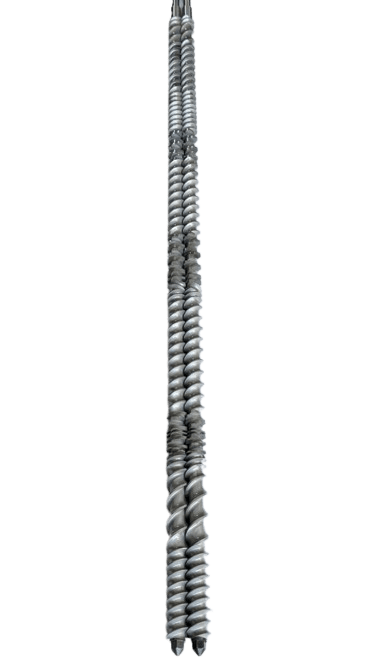
1. Optimize Screw Configuration
The screw determines how efficiently material is conveyed and melted.
What to Check:
- Compression ratio
- Mixing element placement
- Flight depth
- L/D ratio
If material is not melting efficiently, you’re wasting potential output.
Upgrading screw geometry alone can increase output 8–15% without raising RPM.
2. Improve Barrel Temperature Profiling
Improper temperature gradients reduce melt flow efficiency.
Best Practice:
- Maintain gradual temperature rise
- Avoid overheating feed zone
- Stabilize metering zone
- Keep die temperature balanced
Correct temperature tuning improves melt viscosity and reduces back pressure.
Result: Higher output at same speed.
3. Stabilize Material Feeding
Inconsistent feeding limits extrusion capacity.
Optimize by:
- Calibrating feeder regularly
- Avoiding hopper bridging
- Ensuring consistent bulk density
- Using gravimetric feeding (if possible)
A stable feed increases volumetric efficiency significantly.
4. Reduce Back Pressure at Die
Excess back pressure restricts throughput.
Check for:
- Die blockage
- Narrow die land
- Rough internal die surface
- Carbon buildup
Polishing or optimizing die flow can increase throughput 5–10%.
5. Improve Cooling System Efficiency
Overloaded cooling causes process instability.
Ensure:
- Proper chiller capacity
- Clean cooling channels
- Balanced vacuum tank pressure
Stable cooling allows higher throughput without dimensional variation.
6. Monitor Torque & Melt Pressure Together
High torque doesn’t always mean higher output.
If torque rises without proportional output increase, the system is inefficient.
Adjust:
- Feed rate
- Compression profile
- Mixing intensity
Target stable torque with increasing kg/hr ratio.
Output Optimization Summary
Production Optimization Impact Summary
| Optimization Area | Potential Output Gain |
|---|---|
| Screw upgrade | 8–15% |
| Temperature tuning | 5–10% |
| Feeding stability | 5–12% |
| Die optimization | 5–10% |
| Process monitoring | 3–8% |
Combined optimization can increase output 15–25% without increasing RPM.
Conclusion
Efficiency Over RPM
Higher RPM ≠ Higher Efficiency.
Real production growth comes from:
- Optimized screw design
- Balanced temperature zones
- Stable feeding
- Reduced back pressure
- Smart monitoring
When your process is efficient, your machine performs better — without extra stress.
Want to Improve Output in Your Plant?
How We Support Manufacturers
We help manufacturers with:
- Twin screw configuration optimization
- Die flow analysis
- Energy & output balancing
- Performance troubleshooting