Introduction
In a twin extruder PVC pipe line , the die is responsible for shaping the final product. However, even the best die design cannot perform properly without the correct extruder screw configuration.
The relationship between:
- Extruder Screw Design
- Melt Pressure
- Die Geometry
- Flow Distribution
directly affects:
- Pipe Ovality
- Surface Defects
- Wall Thickness Variation
- Pressure Instability
Proper die and screw balance ensures smooth and stable extrusion.
What Is a Twin Extruder Die?
A twin extruder die is the final section of the extrusion system where molten PVC is shaped into pipe form.
Main Functions:
- Control Melt Flow
- Stabilize Pressure
- Maintain Dimensional Accuracy
- Improve Surface Finish
The die works together with the extruder screw to create uniform output.
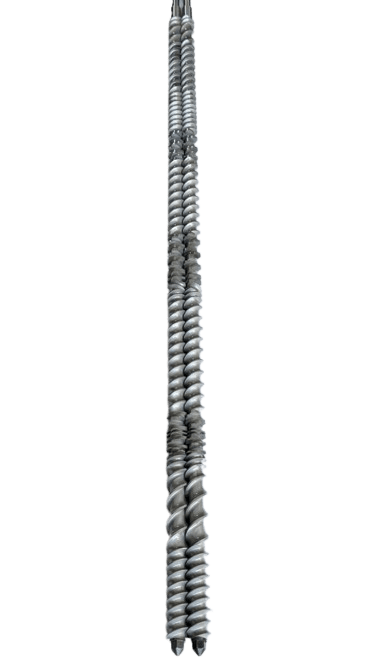
How Extruder Screw Affects Die Performance
The extruder screw controls:
- Material Conveying
- Plasticizing
- Pressure Generation
- Melt Homogeneity
If screw performance is unstable, the die cannot maintain consistent flow.
Step-by-Step Rejection Reduction Strategy
1 ) Melt Pressure Stability
Stable screw operation ensures stable pressure inside the die.
Unstable pressure causes:
- Pipe Diameter Fluctuation
- Uneven Wall Thickness
- Surface Marks
 Related:
Twin Extruder Melt Pressure Fluctuation
2) Melt Homogeneity
Poor screw mixing creates uneven melt consistency.
This leads to:
- Flow Imbalance
- Weak Fusion
- Surface Roughness
Learn More:
Twin Extruder Screw Design Explained
3) Material Distribution
Extruder screw geometry affects how evenly material enters the die.
Improper distribution causes:
- Ovality
- Pipe Bending
- Thickness Variation
Important Elements of Twin Extruder Die Design
Die Head
Controls primary melt distribution.
Requires:
- Smooth Flow Channels
- Balanced Pressure
Mandrel
Forms internal pipe diameter.
Incorrect mandrel alignment may cause:
- Eccentricity
- Wall Variation
Die Gap
Controls wall thickness.
Too Narrow:
→ High Pressure
Too Wide:
→ Poor Dimensional Control
Flow Channel Design
Flow channels must minimize turbulence.
Poor design leads to:
- Melt Stagnation
- Burning
- Surface Defects
Common Die-Related Problems
| Problem | Possible Cause |
|---|
| Ovality | Uneven flow distribution |
| Burn Marks | Material stagnation |
| Wall Thickness Variation | Incorrect die gap |
| Surface Roughness | Poor melt homogeneity |
Optimization Tips for Die & Extruder Screw Performance
- Match die size with output capacity
- Optimize extruder screw configuration
- Maintain stable melt pressure
- Clean die regularly
- Monitor temperature balance
Related:
Twin extruder barrel temperature guide
Importance of Proper Die Maintenance
Regular die maintenance prevents:
- Carbon Buildup
- Flow Restriction
- Pressure Spikes
Maintenance Checklist:
- Clean Flow Channels
- Inspect Die Gap Check Mandrel Alignment
- Monitor Pressure Trends
Conclusion
Twin extruder die performance depends heavily on extruder screw stability and melt consistency.
By optimizing:
- Screw Configuration
- Pressure Control
- Die Geometry
- Flow Distribution
Manufacturers can achieve:
- Better Pipe Quality
- Reduced Rejection
- Stable Production
- Higher Efficiency
Need Help Optimizing Your Twin Extruder Die & Extruder Screw Setup?
We provide:
- Twin extruder process optimization
- Custom die solutions
- Extruder screw configuration consulting
- PVC pipe quality improvement support